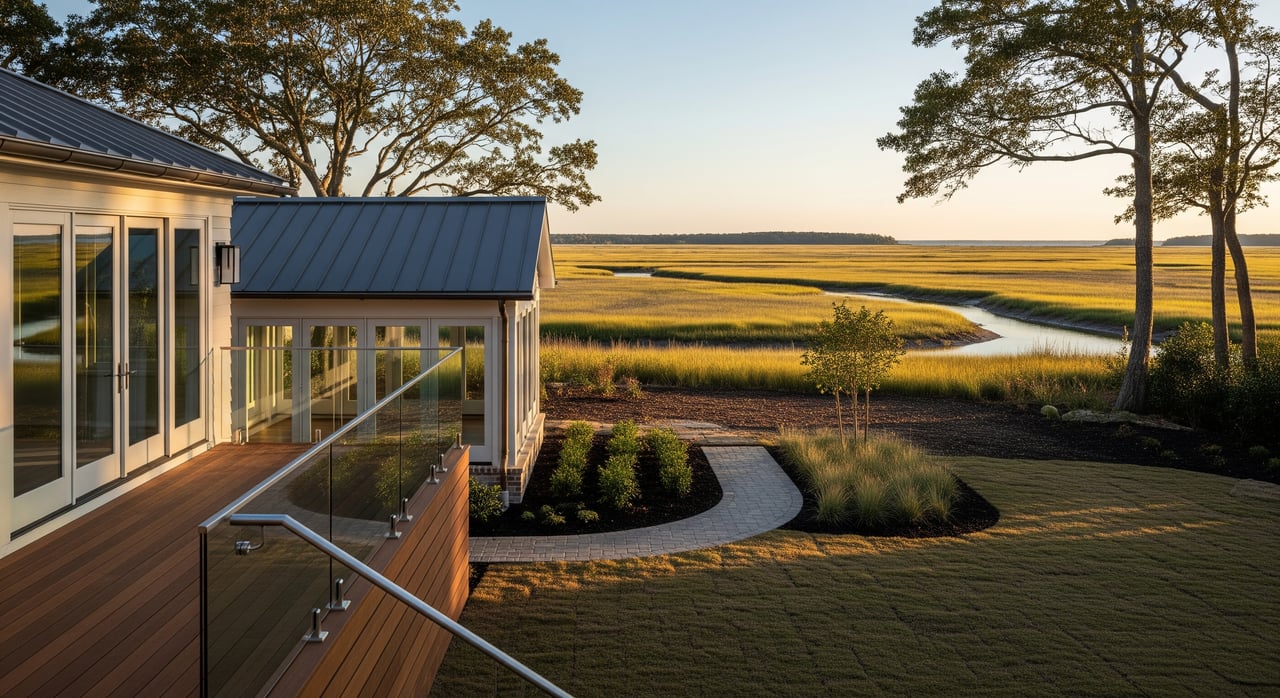
Planning an addition, a new deck, or a backyard refresh in Suffolk near water or wetlands? Before you sketch a plan, you need to understand how Chesapeake Bay rules affect where you can build and what you can clear. This guide breaks down Suffolk’s CBPA basics, what is allowed for additions and accessory structures, and the steps to get a project approved. Let’s dive in.
What the CBPA means in Suffolk
The Chesapeake Bay Preservation Area program organizes land into Resource Protection Areas (RPAs), Resource Management Areas (RMAs), and Intensely Developed Areas. RPAs include tidal shores, tidal wetlands, certain connected non-tidal wetlands, and the adjacent vegetated buffer. Suffolk’s local rules implement the state framework through its ordinance and maps, which you can review in the Chesapeake Bay Preservation Overlay section of the UDO.
The core rule is the 100-foot RPA buffer measured landward from the RPA feature. Suffolk states that all new development must be outside this 100-foot buffer except for specific water-dependent uses that meet conditions. You can confirm local requirements in the city’s Building in the Chesapeake Bay Preservation Area guidance.
Are you in an RPA? Start here
- Check if your property includes an RPA using the state’s CBPA mapping layers and by speaking with Suffolk Planning. Site-specific confirmation may be required.
- Find your lot’s recording date. Pre-recorded lots may qualify for limited administrative encroachment relief with mitigation.
- Talk with Suffolk Planning before you design. They will confirm if you need a CBPA encroachment or exception and whether a Water Quality Impact Assessment (WQIA) is required.
Additions to your home
Home additions are expected to stay outside the 100-foot buffer. If your lot was recorded before the CBPA took effect, you may request a limited encroachment through a CBPA Encroachment application. The city explains that the encroachment must be the minimum necessary, include mitigation such as revegetation, and cannot extend into the seaward 50 feet of the buffer. See Suffolk’s pre-recorded lot and encroachment FAQ for details.
Decks, patios and accessory structures
Detached garages, sheds, gazebos, pools, patios, and decks generally must be outside the RPA buffer. An exception is required for any accessory structure proposed inside the buffer, and larger or non-routine cases may go to a public review body for a decision. Review Suffolk’s accessory structure FAQ before you plan.
Yard work and vegetation in the buffer
RPA buffers are meant to stay vegetated with indigenous plants. Limited vegetation removal can be allowed for sight lines, access paths, removal of dead or diseased trees, and similar minor activities, often with revegetation to maintain buffer function. Suffolk follows state guidance summarized in its CBPA homeowner page and the statewide Riparian Buffers Modification and Mitigation Manual.
Shoreline work and water-dependent facilities
Water-dependent projects such as docks, piers, bulkheads, and living shorelines are handled under separate rules. These activities can be permitted within the RPA when they are truly water dependent, but they often require joint permits with the Virginia Marine Resources Commission and the Army Corps of Engineers. Start with Suffolk’s page on Water-Dependent Facilities in the RPA for contacts and process.
Permits and the approval path
- CBPA Encroachment or Exception: Required for any encroachment into the buffer that is not a permitted minor modification. You must show the encroachment is the minimum necessary and propose mitigation such as revegetation or stormwater best practices.
- Water Quality Impact Assessment (WQIA): Often required for substantial buffer disturbances to analyze impacts and justify mitigation.
- Administrative vs. public review: Minimal encroachments on certain pre-recorded lots may be handled administratively with conditions. Larger or unusual requests can require a public hearing.
- Other triggers: Projects that disturb more than 2,500 square feet can require erosion and sediment control and stormwater management under the UDO.
Design tips that improve approvals
- Minimize the encroachment area and avoid the seaward 50 feet of the buffer.
- Favor elevated or open decks and pervious materials to reduce ground disturbance and impervious cover.
- Include a clear revegetation plan using native species and add on-lot stormwater practices, such as rain gardens or infiltration.
- For shoreline projects, present living shoreline options and show early coordination with VMRC and the Army Corps.
Common outcomes in Suffolk
- Like-for-like repair or replacement that does not increase footprint is often easier to approve. Any expansion typically triggers CBPA review.
- Additions and accessory structures are usually kept out of the buffer. Exceptions can be possible on pre-recorded lots with mitigation and careful design.
- Vegetation work is often allowed in limited, well-defined ways and usually requires replanting to maintain buffer function.
Next steps
Start by confirming whether your lot includes RPA and by speaking with Suffolk Planning about your project scope and the right application path. If you are buying or selling a home that may be in the CBPA, you can plan your timeline, budget, and design choices with this in mind. For local guidance that fits your goals and timeline, reach out to The Foundry Group.
FAQs
What is the 100-foot RPA buffer in Suffolk and why does it matter?
- The buffer is a protected strip of land next to tidal waters, connected wetlands, and tidal shores where new development is tightly limited to protect water quality.
Can I build a home addition inside the RPA in Suffolk?
- Only in limited cases on qualifying pre-recorded lots through a CBPA Encroachment application that proves minimum necessary impact, with mitigation and no encroachment into the seaward 50 feet.
Are decks and sheds allowed in the RPA buffer in Suffolk?
- Accessory structures are generally placed outside the buffer; anything proposed inside the buffer needs an exception and may require public review and mitigation.
Can I rebuild an existing deck that sits in the RPA?
- Like-for-like replacement without increasing footprint may be possible depending on site history, but any increase or new impervious area will likely require CBPA review.
Who do I contact for docks, bulkheads, or living shorelines in Suffolk?
- Coordinate with Suffolk Planning and the joint permit agencies, including VMRC and the Army Corps, since water-dependent facilities have separate permit requirements.